Anubis
Anubis, god of mummification and guardian of the necropolises in Ancient Egypt
Curated byBestiarypediaCreated onUpdated on
 Ancient Egypt(Egypt)
Family Tree


Mythical Origins of Anubis
Anubis (Inpu in Egyptian) is one of the oldest funerary deities of the Egyptian pantheon, and his parentage varies according to the source and the period. In the Pyramid Texts (Old Kingdom) he figures as a primordial funerary deity and son of Ra. The Coffin Texts (Middle Kingdom) present him as son of the cow goddess Hesat or the feline Bastet. The well-known parentage that makes him son of Osiris and Nephthys belongs to the late Greco-Roman tradition, systematized by Plutarch in his work De Iside et Osiride: according to this account, Nephthys conceived him from Osiris and, fearing her husband Set, abandoned the newborn; Isis found him, raised him and took him as guardian and ally, thus being his adoptive mother and never his biological progenitor. In variants of this same tradition, Set (husband of Nephthys) figures as father. From his earliest appearances, Anubis is linked with royalty, the protection of the necropolis and the rites that shield the deceased against the forces of chaos in the underworld.
Role in the Judgment of the Dead
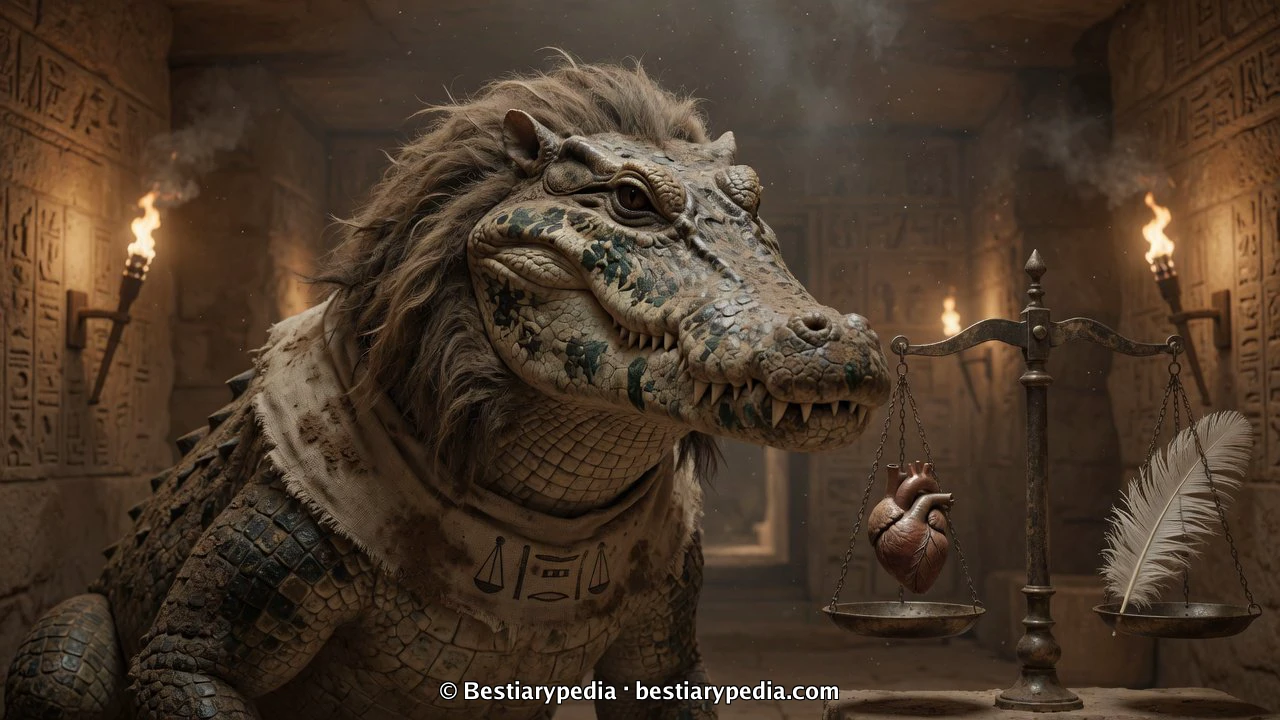
Anubis guides the souls through the Duat and presides over the weighing of the heart, the central scene of the judgment of the dead according to the Book of the Dead (Spell 125). Before Osiris, he places the heart of the deceased on one pan of the scale and the feather of Maat, symbol of truth and cosmic order, on the other. If the heart proves lighter than or equal to the feather, the deceased is declared righteous and gains access to the realm of Osiris; if it weighs more, Ammit, the Devourer, consumes it. As protector against the predators of the underworld, Anubis guarantees the integrity of the process and justice in the transition to eternal life, preserving cosmic balance.
Embalming and Mummification
Anubis is the patron of embalming and mummification. According to the Osirian myth, after the murder of Osiris at the hands of Set, Anubis embalmed his body together with Isis and Nephthys, performing the first mummification and restoring wholeness to the dismembered god. This act made him the divine model of the embalmers: the priests who directed the mummification wore a jackal mask to embody the god during the ritual. He is credited with mastery of the techniques that preserve the body for eternity, an indispensable condition for the survival of the deceased in the afterlife.
Iconography and Sacred Symbols
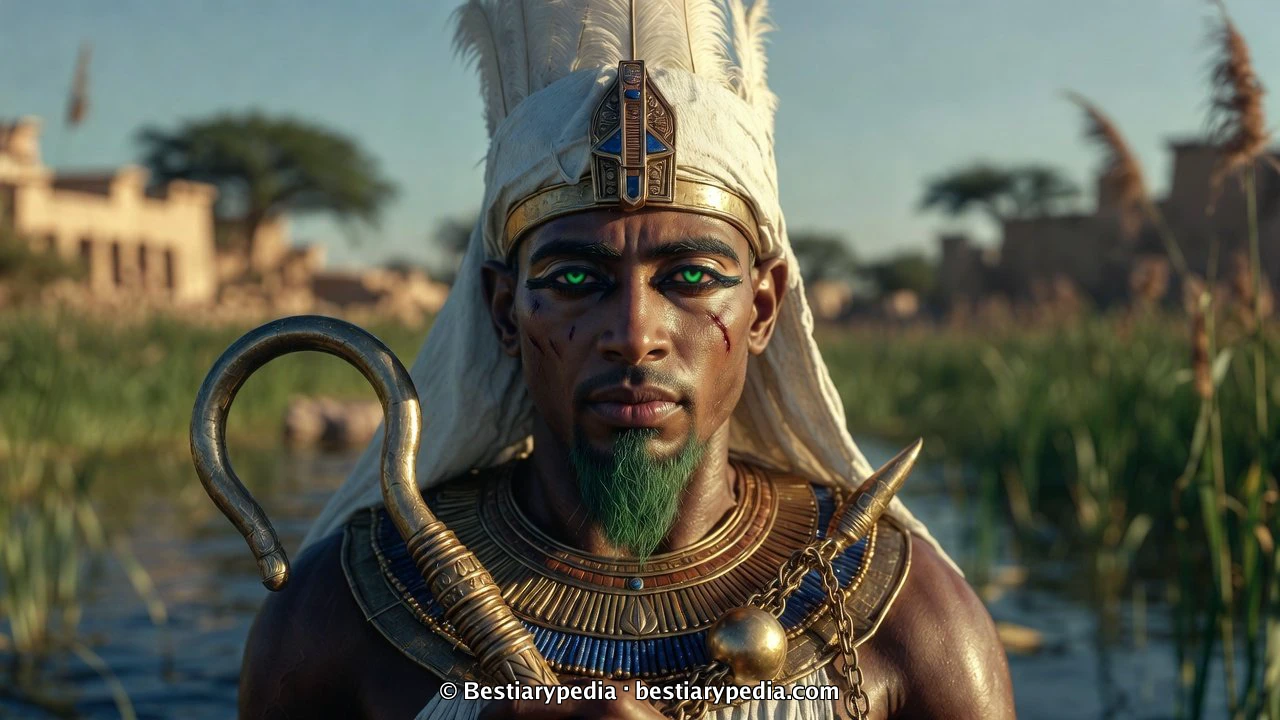
Anubis is represented as a man with a black jackal head, or as a reclining jackal, holding the was scepter and the flail. The black color does not refer to the animal's fur, but rather evokes the dark, fertile soil that the Nile deposited with its floods, as well as the coloration of bodies after embalming; for this reason it symbolizes regeneration and rebirth. Associated with the ankh and the was scepter, he embodies funerary protection and dominion over death in ancient Egypt.
Also known as
Relics
🏺 Was Scepter
Symbol of power and dominion over death.
🏺 Nekhakha Flail
Tool to guide and protect souls.
Symbology
Element
Fertile soil
Number
Four
Color
Black
Animals
Jackal
Sigils:
🏷️ Traits
Powers
Weaknesses
Behavioral
Resistances
🔗 Relations with other beings
Ally of
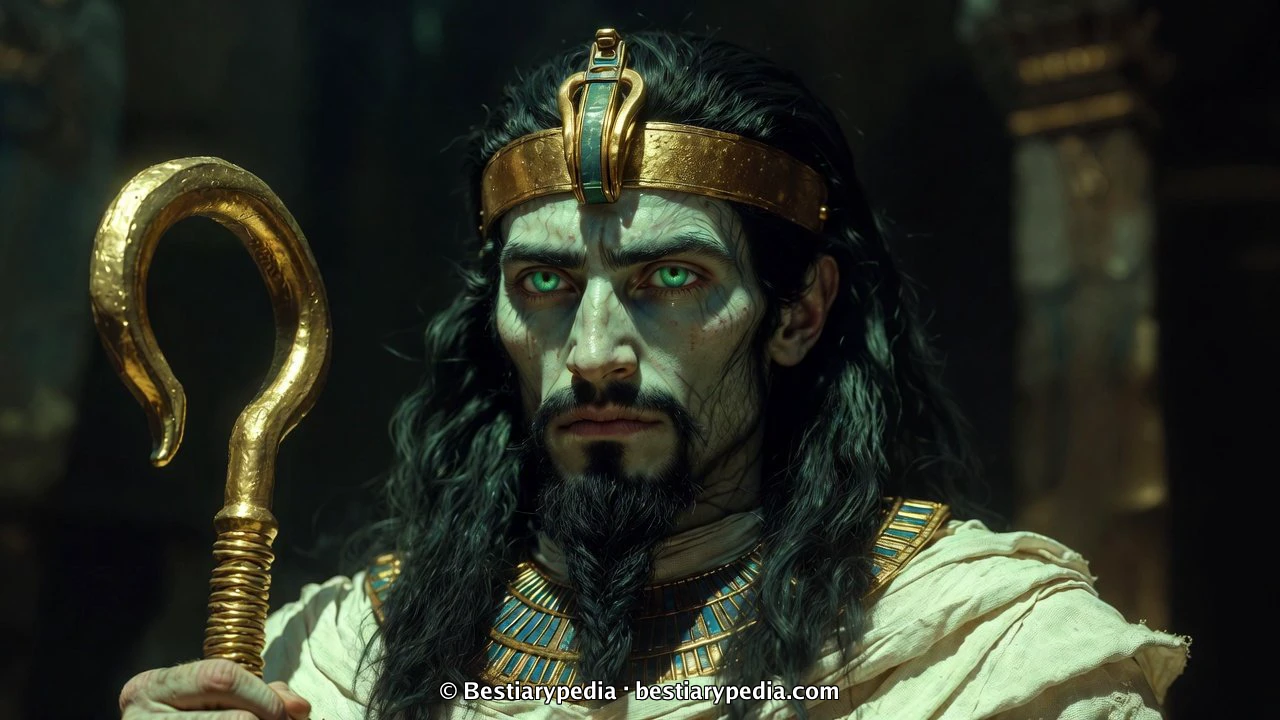
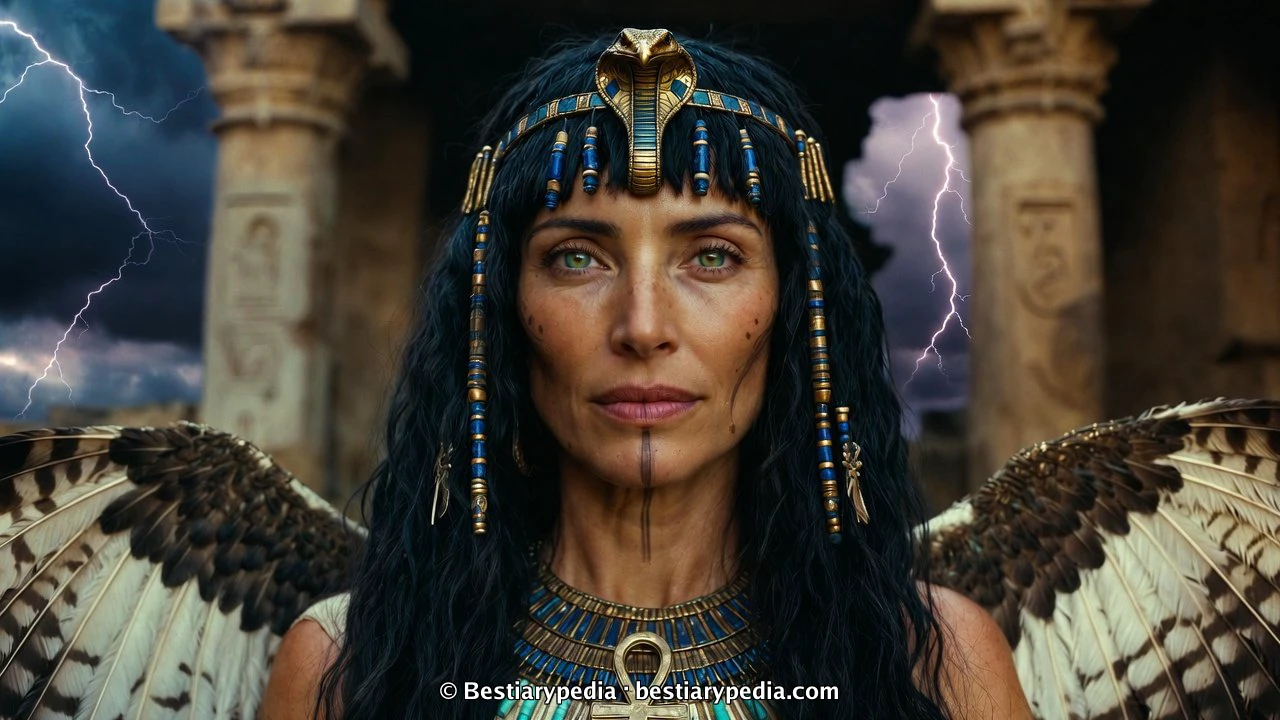
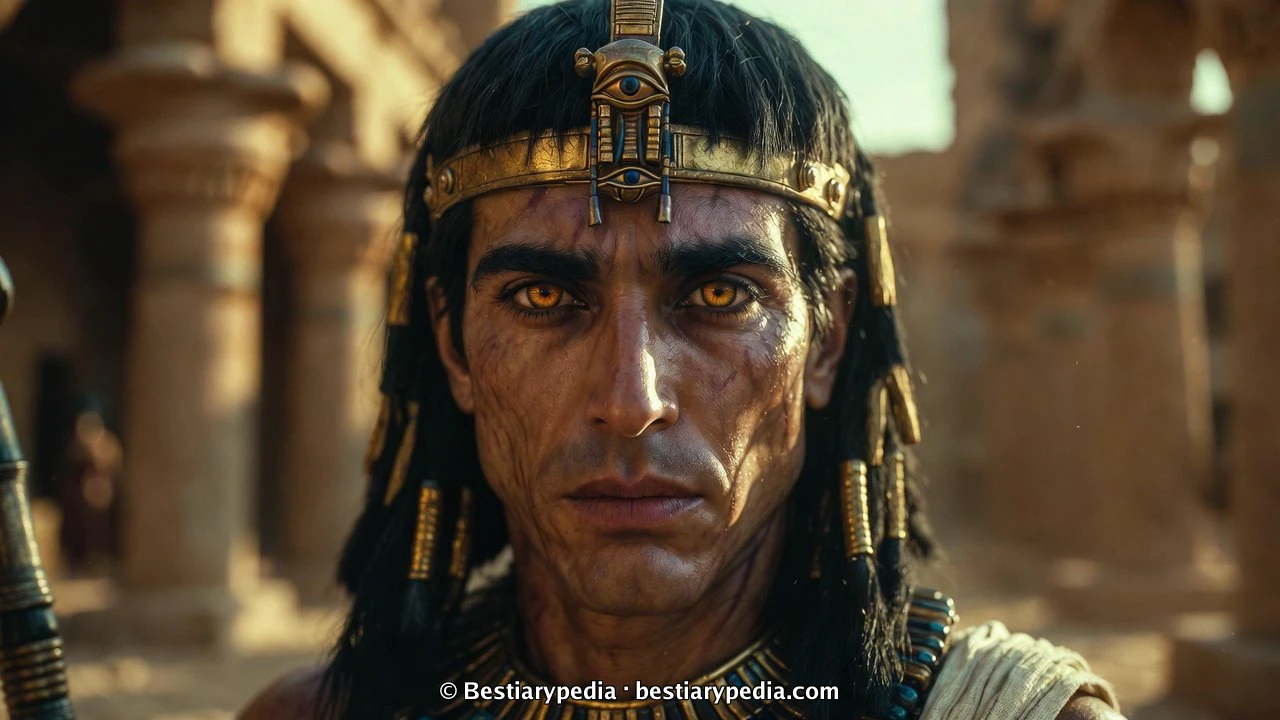
Companion of
🗺️In the Atlas
Travel the beings’ world of origin and the cosmos of their dimensions.
📜 Mythologies
Egyptian mythology developed in ancient Egypt over more than three millennia, from the predynastic period to the Roman era, and was closely linked to the civilization that inhabited the banks of the Nile. Its beliefs were based on a worldview in which cosmic order, represented by the concept of maat, was maintained through the action of the gods and the performance of rituals by humans. The Egyptian pantheon included numerous local and national deities, among which Ra stood out, associated with the sun and creation, and Osiris, god of resurrection and the underworld, along with other figures such as Isis, Horus, Seth and Amun. Mythological narratives explained the origin of the world, the daily cycle of the sun and the fate of the soul after death, integrating elements of the nature of the Nile valley and astronomical observation. Funerary texts, such as the Book of the Dead, and temple reliefs constitute the main sources for the knowledge of these beliefs. Although official worship declined with the Christianization of Egypt, Egyptian mythology has exerted a lasting influence on art, literature and the Western imagination, and continues to be the subject of study in Egyptology.
Sources
Pyramid Texts
Unknown · -2400
Collection of ancient Egyptian funerary texts inscribed in the pyramids of the Fifth and Sixth Dynasties.
On Isis and Osiris
Plutarch · 100
Treatise by Plutarch (1st-2nd century AD) preserving the most complete account of the Osirian cycle and the Egyptian divine family, interpreted for the Greco-Roman world. A key classical source on Egyptian religion.
The Gods of the Egyptians
E. A. Wallis Budge · 1904
Study by E. A. Wallis Budge (1904) on the mythology and religion of Ancient Egypt, richly illustrated with its deities.
Book of the Dead
Anonymous · c. 1550 BC
Compilation of funerary spells from ancient Egypt used from the New Kingdom onward.
Coffin Texts
Unknown · c. 2000 BCE
Egyptian funerary texts inscribed on coffins from the Middle Kingdom.
Frequently asked questions
How is the origin of Anubis described in the Pyramid Texts?
In the Pyramid Texts (Old Kingdom), Anubis appears as a primordial funerary deity and son of Ra, charged with protecting the necropolis and guiding the deceased. The parentage that makes him son of Osiris and Nephthys, with Isis as adoptive mother, does not belong to this corpus, but to the late Greco-Roman tradition recorded by Plutarch; the somewhat later Coffin Texts call him son of Hesat or of Bastet.
What role does Anubis play in the judgment of the dead?
Anubis guides souls to the Duat and oversees the weighing of the heart against Maat's feather before Osiris. As protector against underworld predators he ensures only the righteous access Osiris's realm.
How is Anubis iconographically represented and what does the black color symbolize?
Anubis is depicted as a man with black jackal head holding scepter and flail or as wrapped mummy. The black color evokes Nile's fertile soil and regeneration.
🔖Cite this entry▾
If you cite this article in an academic, journalistic or editorial publication, use any of these formats:
Bestiarypedia. (2026, August 2). Anubis. Bestiarypedia. https://bestiarypedia.com/en/beings/anubis
Free citation with attribution and canonical link for editorial, academic or journalistic use. Full commercial reuse or creation of derivative products requires prior agreement.
Similar beings
Sobek
Sobek, god of the Nile, fertility and protection in Egyptian mythology
Sekhmet
Sekhmet, Egyptian goddess of war, vengeance and healing

Nephthys
Nephthys, Egyptian funerary goddess, sister of Isis, wife of Set and mother of Anubis
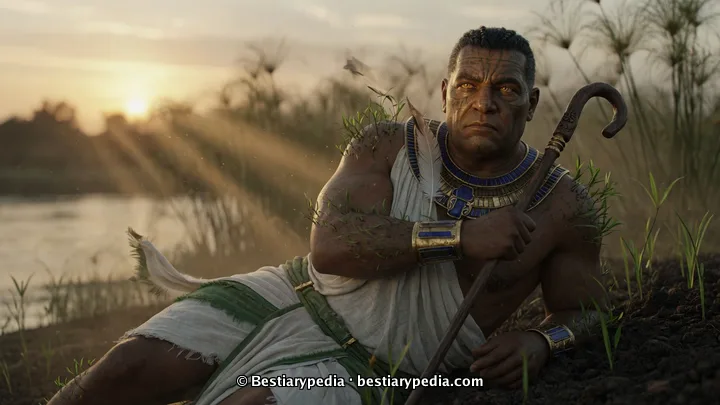
Geb
Geb, Egyptian god of the Earth, son of Shu and Tefnut
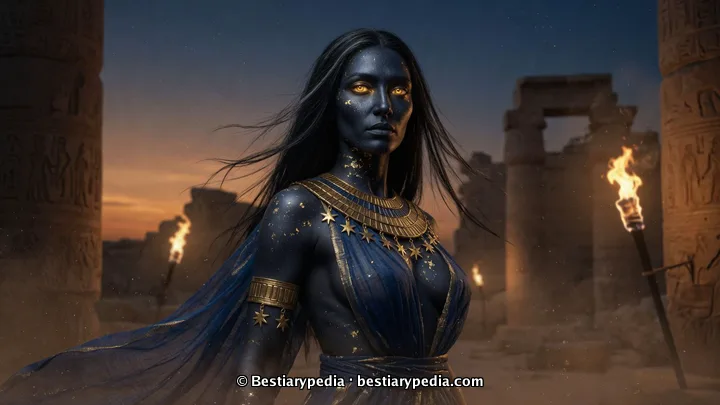
Nut
Nut, Egyptian goddess of the sky who arches over the Earth
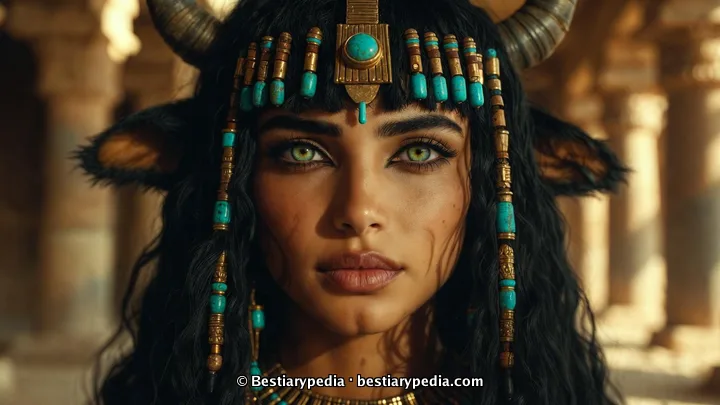
Hathor
Hathor, goddess of love, beauty, music and motherhood in Egyptian mythology