Danu
Danu, primordial mother goddess of the Irish Celtic pantheon
Curated byBestiarypediaCreated on
 Ireland(Ireland)
Family Tree

Mythical Origins of Danu
Danu is considered the primordial mother of the Tuatha Dé Danann according to the Lebor Gabála Érenn, a medieval text narrating the arrival of the Irish gods. Associated with rivers and flowing waters, she represents fertility and vital flow from prehistoric Celtic times. Her name derives from Indo-European roots linked to territorial sovereignty and natural abundance.
Nature and Attributes of Danu
Danu embodies the sovereignty of the land and sacred waters, linked to rivers like the Danube in continental traditions. She symbolizes maternal fertility, ancestral wisdom and protection of the Celtic people. Her essence flows like the currents that nourish life, granting legitimacy to kings and heroes through the territorial bond.
Role in Mythology and Legacy of Danu
In texts such as Cath Maige Tuired the Tuatha descend from Danu and she contributes to the defeat of the Fomorians. Her legacy endures in European rivers and sacred hills, symbolizing motherhood and renewal in later Celtic folklore. She grants divine legitimacy to rulers through her connection to the fertile land.
Rivers, Sídhe and Cult of Danu
Danu's imprint is more toponymic than narrative: her name, kin to an Indo-European root of the waters, echoes in hydronyms across Europe —the Danube, the Don, the Dnieper, the Dniester— and ties her to the currents that make the earth fertile. In Ireland she gave her name to the Dá Chích Anann, 'the two paps of Anu', a pair of twin hills in Kerry that tradition linked to her nourishing motherhood, which is why she is often identified with Anu or Ana. As matriarch of the Tuatha Dé Danann —whose name means precisely 'the people of the goddess Danu'— she embodies the sovereignty of the land that legitimises kings and heroes: from her descends the divine race that came to Ireland and fought the Fomorians on the plains of Mag Tuired. Unlike other goddesses of the pantheon, Danu scarcely appears personified in the action of the tales; her presence is that of a principle, not a character. It is precisely this diffuse quality that has made her, in modern reception, the great Celtic mother par excellence, and her cult —reconstructed more than documented— is today associated with springs, holy wells and the hills from which, so belief holds, life wells up into the world.
Also known as
Symbology
Element
Water
Number
Three
Color
Emerald Green
Animals
Salmon
Sigils:
🏷️ Traits
Powers
Weaknesses
Behavioral
Resistances
🗺️In the Atlas
Travel the beings’ world of origin and the cosmos of their dimensions.
📜 Mythologies
Irish folklore developed from the oral traditions of the Celtic peoples who inhabited Ireland since the Iron Age, with later influences from Christianity after the arrival of Saint Patrick in the 5th century. Its tales collect beliefs in supernatural beings and mythical cycles transmitted in medieval manuscripts such as the Lebor Gabála Érenn. Among the most prominent entities are the Tuatha Dé Danann, a mythical people endowed with magical powers who, according to tradition, were defeated and relegated to the underworld, where they are identified with the fairies or sídhe. The worldview of Irish folklore integrates a landscape animated by spirits, enchanted hills and seasonal festivities such as Samhain, which mark the interaction between the human world and that of the fairy beings. The narratives emphasize the ambivalence of these beings, capable both of granting favors and of causing harm, and reflect a continuity between pre-Christian mythology and later popular practices. This set of beliefs has left a lasting mark on the literature, music and arts of Ireland, influencing authors such as W. B. Yeats and the preservation of festivities and customs that still form part of Irish cultural identity.
Sources
Gods and Fighting Men, by Lady Gregory
Lady Augusta Gregory · 1904
Compilation by Lady Augusta Gregory (1904) that gathers and retells in English the myths of the Tuatha Dé Danann and the Irish heroic cycles; a reference work in the public domain.
Lebor Gabála Érenn
Medieval Irish Anonymous · c. 1100
The "Book of the Taking of Ireland", a medieval compilation (c. 1100) recounting the successive mythical peoples who settled the island, among them the Tuatha Dé Danann and the Fomorians, and a fundamental source of the divinities and beings of Irish myth.
Cath Maige Tuired
Medieval Irish Anonymous · c. 900
"The Battle of Mag Tuired", a medieval Irish saga recounting the clash between the Tuatha Dé Danann and the Fomorians. The Dagda, Lugh and Balor stand out in it, and it is an essential source of the gods and supernatural beings of the Irish mythological cycle.
Frequently asked questions
From which medieval text is Danu considered the primordial mother of the Tuatha Dé Danann?
According to the Lebor Gabála Érenn, Danu is the primordial mother of the Tuatha Dé Danann. This medieval text narrates the arrival of the Irish gods. Her name derives from Indo-European roots linked to territorial sovereignty.
What characteristic attributes does Danu embody in relation to the sovereignty of the land and waters?
Danu embodies the sovereignty of the land and sacred waters. She symbolizes maternal fertility, ancestral wisdom and protection of the Celtic people. Her essence flows like the currents that nourish life.
What role does Danu play in the defeat of the Fomorians according to mythological texts?
In texts such as Cath Maige Tuired the Tuatha descend from Danu. She contributes to the defeat of the Fomorians. Her legacy endures in European rivers and sacred hills.
🔖Cite this entry▾
If you cite this article in an academic, journalistic or editorial publication, use any of these formats:
Bestiarypedia. (2026, August 4). Danu. Bestiarypedia. https://bestiarypedia.com/en/beings/danu
Free citation with attribution and canonical link for editorial, academic or journalistic use. Full commercial reuse or creation of derivative products requires prior agreement.
Similar beings
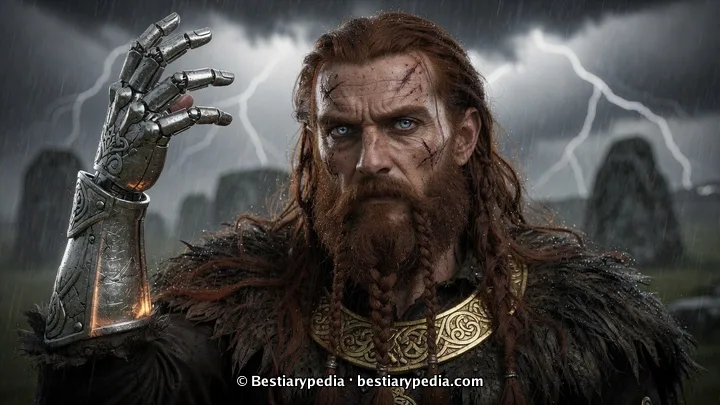
Nuada
Nuada, king of the Tuatha Dé Danann and Celtic god of war, sovereignty and healing
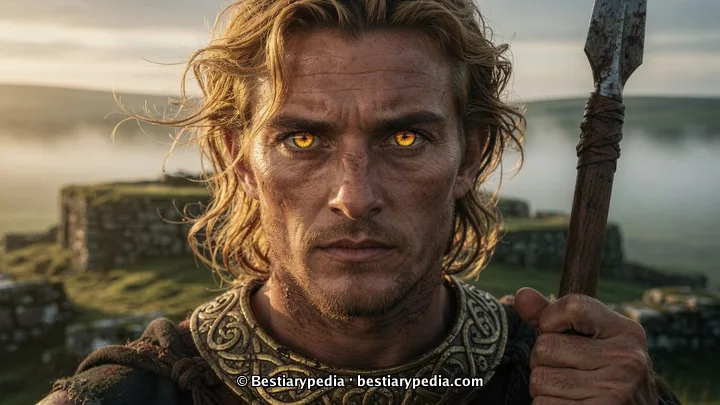
Lugh
Lugh, Celtic god of light, arts and sovereignty
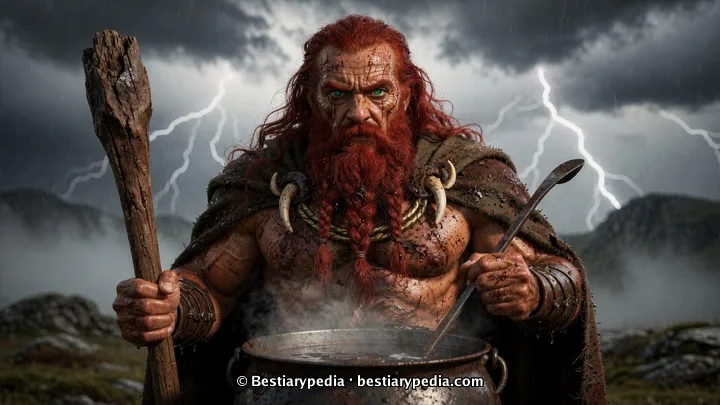
Dagda
Dagda, supreme god of the Irish Celtic pantheon

Morrigan
Morrigan, Celtic goddess of war, sovereignty and death