Dagda
Dagda, supreme god of the Irish Celtic pantheon
Curated byBestiarypediaCreated on
 Ireland(Ireland)
Family Tree

Mythical Origins of Dagda
Dagda, known as the Good God or the supreme god of the Irish Celtic pantheon, emerges as leader of the Tuatha Dé Danann, the divine people who invaded Ireland according to mythological traditions. In ancient texts such as the Lebor Gabála Érenn, he is described as a paternal and powerful figure associated with fertility, druidic wisdom and just war. His origin is linked to the arrival of the Tuatha Dé Danann from the northern islands, where he acquired attributes of abundance and dominion over life and death. Dagda represents the archetype of the father god who provides and protects, embodying principles of cosmic regeneration through his magical treasures.
Powers and Treasures of Dagda
Dagda possesses three main treasures that symbolize his dominion over life, death and abundance: an invincible club that kills with one blow and revives with the other, an inexhaustible cauldron that feeds a hundred men without ever emptying and a magical harp that controls emotions and the seasons of the year. As an expert druid, he wields powerful magic and acts as father to numerous gods including Brigid and Ogma. These attributes make him protector of kings and dispenser of prosperity in Irish mythology.
Myths and Family of Dagda
Dagda participated in epic battles such as Cath Maige Tuired against the Fomorians, demonstrating his bravery and leadership. He was father to prominent gods like Brigid, Ogma and Bodb Derg, and consort to the goddess Boann with whom he fathered Aengus. These narratives position him as a central figure in Irish mythology, linked to the fertility of the land and the protection of his divine people.
Cult, Sídhe and Legacy of the Dagda
Beyond his treasures, the Dagda became bound in Irish tradition to the great mounds of the Boyne valley: Brú na Bóinne (Newgrange) is counted among the Otherworld dwellings he ruled before yielding it to his son Aengus through a trick with time. After the final defeat of the Tuatha Dé Danann by the Milesians, the Dagda took part in the sharing-out of the sídhe, the enchanted mounds where the gods withdrew to become the Aos Sí. His figure, half solemn and half comic —a porridge-glutton, coarse of bearing yet of unfathomable druidic wisdom— embodies the ambivalence of the god of plenty who presides over both life and death. Later folklore kept his memory in place-names and in the association of his bottomless cauldron with myths of the vessel of abundance, a motif that echoes centuries later in the legends of the Grail.
Relics
🏺 Dagda's Club
Club that kills nine and revives one.
🏺 Cauldron of Plenty
Cauldron of plenty.
Symbology
Element
Earth
Number
Three
Color
Red
Animals
Boar
Sigils:
🏷️ Traits
Powers
Weaknesses
Behavioral
Resistances
🔗 Relations with other beings
🗺️In the Atlas
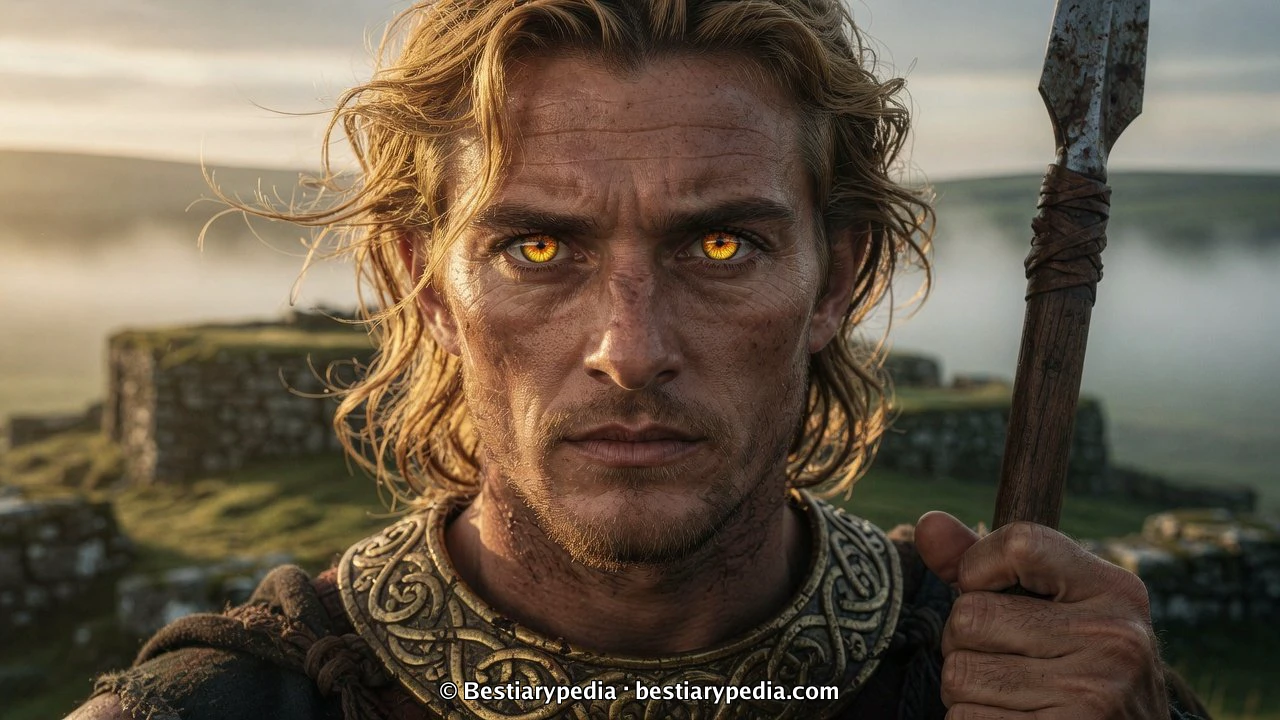
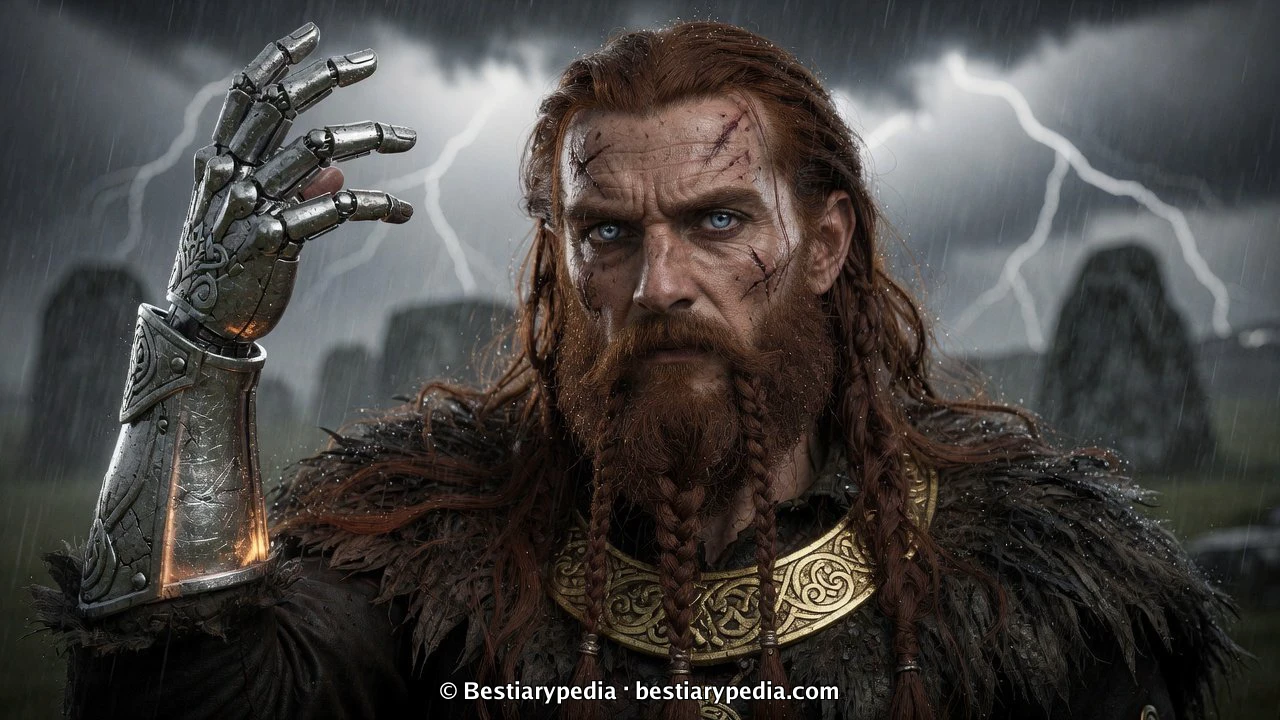
Travel the beings’ world of origin and the cosmos of their dimensions.
📜 Mythologies
Irish folklore developed from the oral traditions of the Celtic peoples who inhabited Ireland since the Iron Age, with later influences from Christianity after the arrival of Saint Patrick in the 5th century. Its tales collect beliefs in supernatural beings and mythical cycles transmitted in medieval manuscripts such as the Lebor Gabála Érenn. Among the most prominent entities are the Tuatha Dé Danann, a mythical people endowed with magical powers who, according to tradition, were defeated and relegated to the underworld, where they are identified with the fairies or sídhe. The worldview of Irish folklore integrates a landscape animated by spirits, enchanted hills and seasonal festivities such as Samhain, which mark the interaction between the human world and that of the fairy beings. The narratives emphasize the ambivalence of these beings, capable both of granting favors and of causing harm, and reflect a continuity between pre-Christian mythology and later popular practices. This set of beliefs has left a lasting mark on the literature, music and arts of Ireland, influencing authors such as W. B. Yeats and the preservation of festivities and customs that still form part of Irish cultural identity.
Sources
Gods and Fighting Men, by Lady Gregory
Lady Augusta Gregory · 1904
Compilation by Lady Augusta Gregory (1904) that gathers and retells in English the myths of the Tuatha Dé Danann and the Irish heroic cycles; a reference work in the public domain.
Lebor Gabála Érenn
Medieval Irish Anonymous · c. 1100
The "Book of the Taking of Ireland", a medieval compilation (c. 1100) recounting the successive mythical peoples who settled the island, among them the Tuatha Dé Danann and the Fomorians, and a fundamental source of the divinities and beings of Irish myth.
Cath Maige Tuired
Medieval Irish Anonymous · c. 900
"The Battle of Mag Tuired", a medieval Irish saga recounting the clash between the Tuatha Dé Danann and the Fomorians. The Dagda, Lugh and Balor stand out in it, and it is an essential source of the gods and supernatural beings of the Irish mythological cycle.
Frequently asked questions
How is Dagda's origin linked to the arrival of the Tuatha Dé Danann from the northern islands?
Dagda emerges as leader of the Tuatha Dé Danann in ancient texts such as the Lebor Gabála Érenn. His origin is linked to the arrival from the northern islands. He represents the archetype of the father god who provides and protects through his magical treasures.
What main treasures symbolize Dagda's dominion over life, death and abundance?
Dagda possesses an invincible club that kills with one blow and revives with the other. He also has an inexhaustible cauldron that feeds a hundred men and a magical harp that controls emotions and seasons. These attributes make him protector of kings and dispenser of prosperity.
What family relationships and alliances did Dagda establish with other deities of the Irish pantheon?
Dagda was father to prominent gods like Brigid, Ogma and Bodb Derg. He was consort to the goddess Boann with whom he fathered Aengus. These narratives position him as a central figure linked to the fertility of the land and the protection of his divine people.
In which epic battles did Dagda participate and what role did he play against the Fomorians?
Dagda participated in epic battles such as Cath Maige Tuired against the Fomorians. He demonstrated his bravery and leadership in these confrontations. These narratives position him as a central figure in Irish mythology linked to the protection of his divine people.
🔖Cite this entry▾
If you cite this article in an academic, journalistic or editorial publication, use any of these formats:
Bestiarypedia. (2026, August 4). Dagda. Bestiarypedia. https://bestiarypedia.com/en/beings/dagda
Free citation with attribution and canonical link for editorial, academic or journalistic use. Full commercial reuse or creation of derivative products requires prior agreement.
Similar beings
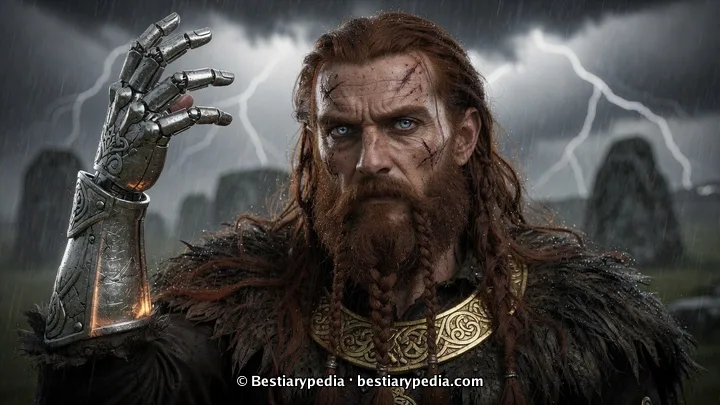
Nuada
Nuada, king of the Tuatha Dé Danann and Celtic god of war, sovereignty and healing
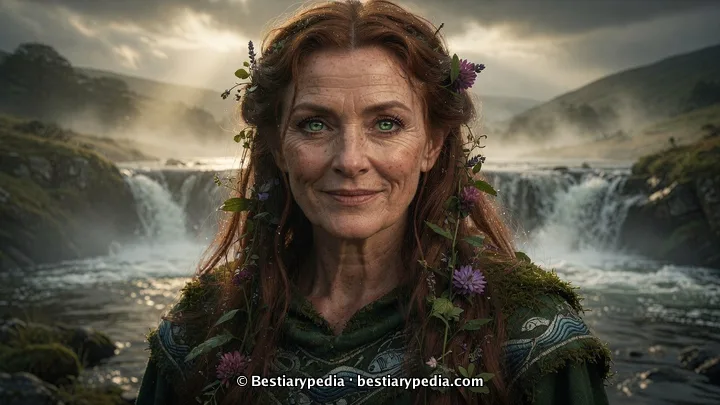
Danu
Danu, primordial mother goddess of the Irish Celtic pantheon
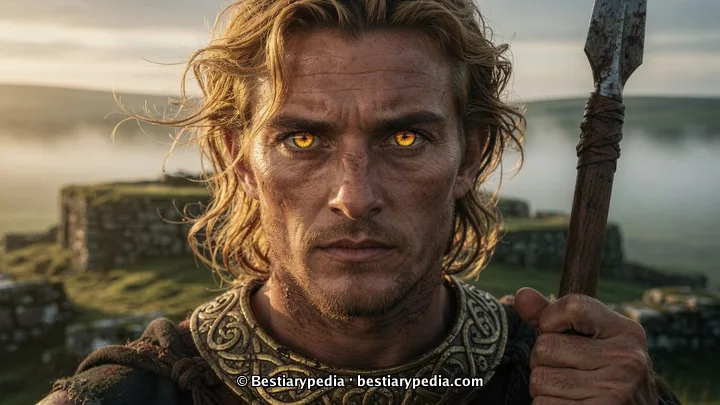
Lugh
Lugh, Celtic god of light, arts and sovereignty

Morrigan
Morrigan, Celtic goddess of war, sovereignty and death